
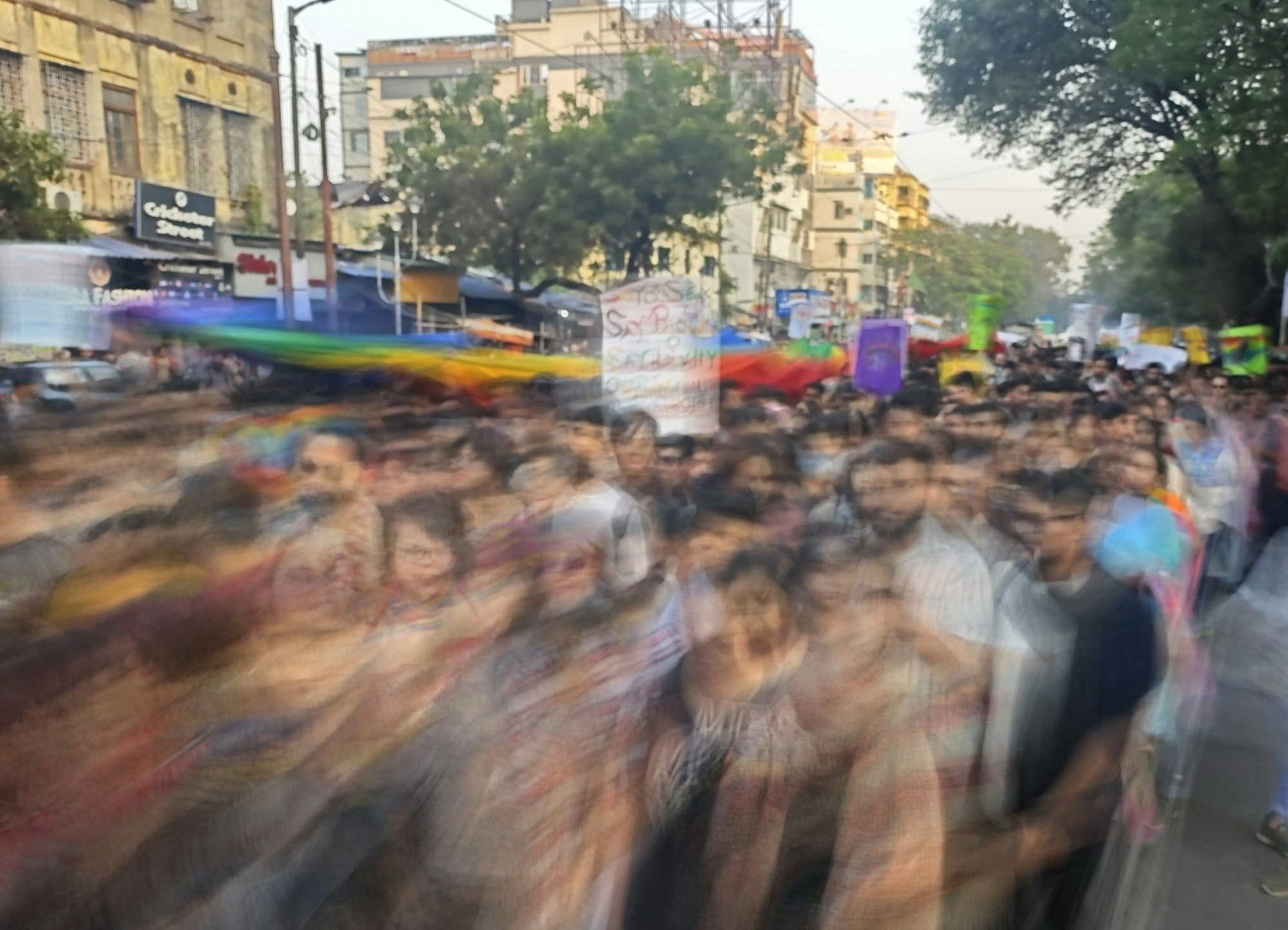
Sex worker associations in India are basically collectives put together by concerned sex workers. These associations are generally community-based, usually assisted by Non-Government Organisations (NGOs) and in some instances by rights groups as well. Their work falls in the domains of public health, labour rights, gender justice, and anti-trafficking activism.
In the Indian context, these associations are not viewed as “unions” because of social and legal issues surrounding prostitution. Therefore, they are generally classified as community-based organisations (CBOs) or collectives.
A few of the active larger associations are enumerated below with their brief details and the battles they are fighting.
Durbar Mahila Samanwaya Committee (DMSC) - Kolkata
The Durbar Mahila Samanwaya Committee (DMSC) was founded in 1995 in a place called Sonagachi, in the “City of Joy,” Kolkata. DMSC has about 60,000 members drawn from across the state of West Bengal. DMSC has the distinction of being one of the largest and most dominant sex-worker associations in India.
DMSC came into being through the Sonagachi HIV Intervention Project, which was set up at that time. It was a result of the awareness that dawned upon health researchers that prevention programmes need to be organised by sex workers themselves if they were to really succeed.
Functions of DMSC
- Organises health clinics and conducts HIV/STD programmes for sex workers in the state.
- Advocates the recognition of sex work as legitimate labour.
- Provides legal aid and spreads awareness of rights via trained paralegals.
- Advocates micro-credit and cooperative banking to eliminate the moneylender menace.
- Runs schools and provides hostel facilities for sex workers’ children.
Key battles
The organisation’s main campaigns include:
- Decriminalisation of sex work in India
- Social security – procuring ration cards, voter IDs and bank accounts
- Protection from police harassment
- Removing the stigma against the children of sex workers
- Anti-trafficking initiatives led by the community
Key achievements of the organisation include the regular hosting of national conventions of sex workers. The Durbar Mahila Samanwaya Committee follows three principles under which its struggles are framed: Respect, Reliance, and Recognition for sex workers. The DMSC has also played a major role in shaping India’s sex-worker rights movement.
Veshya Anyay Mukti Parishad (VAMP) – Maharashtra & Karnataka
Veshya Anyay Mukti Parishad or VAMP, is a collective of about 5,000 female sex workers in the state of Maharashtra and North Karnataka. This group of women has been working on sex workers’ health and human rights issues. VAMP is the model of a strong organisation of sex workers in the region and represents them not only at the local level but also at the national and international levels. More significantly, VAMP also works with transport and migrant workers in the region.
Veshya Anyay Mukti Parishad loosely translates to “Sex Workers' Collective for Freedom from Injustice.” VAMP came into being in the mid-1990s, with its base in the Sangli district of Maharashtra, under the parent NGO called SANGRAM. SANGRAM is the acronym for Sampada Grameen Mahila Sanstha, which translates as Sampada Rural Women’s Organisation. “Sampada” means wealth or fortune.
Functions of VAMP
- Organises sex workers to collectively negotiate with the brothel owners and the police
- Organises peer-to-peer HIV awareness and prevention programmes
- Conducts legal awareness and rights campaigns
- Documents exploitation and violence in sex work
Key battles
VAMP is specifically known for its fight against some anti-trafficking policies in place. They argue that some of the policies harm voluntary adult sex workers.
National Network of Sex Workers (NNSW) and All India Network of Sex Workers (AINSW)
The NNSW and AINSW are umbrella federations under which local sex-worker organisations across India are represented.
Functions of the national network
The network of NNSW and AINSW coordinates advocacy at the national policy level. They are the prime representatives of sex workers and coordinate with governmental agencies for consultations and HIV related programmes. They endeavour to unite the local collectives from different states across India.
The network was formed to help sex workers across the country to collectively convey their concerns, and they are heard across India. This ensures their needs are addressed, especially in policy debates concerning public health and law.
Key campaigns
The national-level sex-worker networks mainly emphasise:
- Reforming the Immoral Traffic (Prevention) Act or ITPA
- Access to social welfare through ration cards, voter IDs, Aadhaar, and banking
- Inclusion of sex workers in labour and informal sector protections
- Rights of male sex workers and transgenders
Other Regional Collectives
Several small, community-based organisations operate across India in red-light areas and urban clusters. Some examples are:
- Usha Cooperative (West Bengal) – a financial cooperative run by sex-workers
- Ashodaya Samithi (Mysuru) – Works towards HIV prevention and community empowerment
- Prerana (Mumbai) – focuses on the welfare of children of sex workers
These small organisations regularly collaborate with authorities in government HIV programmes. They actively participate in programmes and health initiatives conducted by the National AIDS Control Organisation (NACO) and others.
Major battles these Associations are fighting
The major struggles of sex-worker associations can be categorised into five areas.
Legal ambiguity
In India, sex work, by itself, is not illegal. However, other activities around sex work, such as brothel-keeping, soliciting and pimping, are illegal and are criminalised. Under such a setting, sex workers are often subject to police raids that could lead to unnecessary harassment despite the legality of the work itself. As such, associations demand decriminalisation/labour regulation.
HIV prevention
Sex workers have long been the key population in India’s HIV programmes. Therefore, community collectives have played a vital role in promoting the use of condoms, spreading STI awareness and conducting clinics, as well as generally dispensing health education.
The Sonagachi model initiated by DMSC stands out as an example of a successful community-based HIV prevention method.
Social stigma
Sex workers repeatedly face discrimination in housing issues and in the schooling of their children. They also find it difficult to get timely or proper healthcare due to the social stigma attached to their line of work. Collectives work in an effort to normalise the profession and fight the stigma around it by conducting media campaigns, cultural programmes, and creating public awareness.
Economic exploitation
A large percentage of sex workers are gullible and get entrapped in debt cycles because of availing high-interest loans from private intermediaries. Exploitation by brothel owners and a general lack of access to proper banking facilities also play their part.
Collectives such as DMSC have shown the way forward by creating cooperatives and micro-credit systems to decrease their dependence on exploitative financiers.
Anti-trafficking vs labour rights
There is a huge debate in India concerning voluntary sex work versus trafficking. The sex worker organisations generally argue that illegal trafficking must be severely punished, while adult consensual sex work should not be criminalised. They are generally concerned about anti-trafficking raids that affect adult women against their will.
The Larger Movement
Starting in the early 1990s, the organised sex-worker movement in India has existed for over 30 years now. Initially, they focused on HIV prevention programmes and have, over time, evolved into the larger rights movements. In the present day, there are thousands of peer educators in multiple regional collectives. There are also national federations that represent sex workers across different states.
The movement’s broader message can be summarised by their slogan: “Sex work is work.”
In conclusion
Sex-worker “associations” in India not only function as advocacy groups but also as self-help organisations. They are also organised health networks, labour collectives, and community support systems. Their challenges include the struggle for safety, dignity and recognition for sex work.