
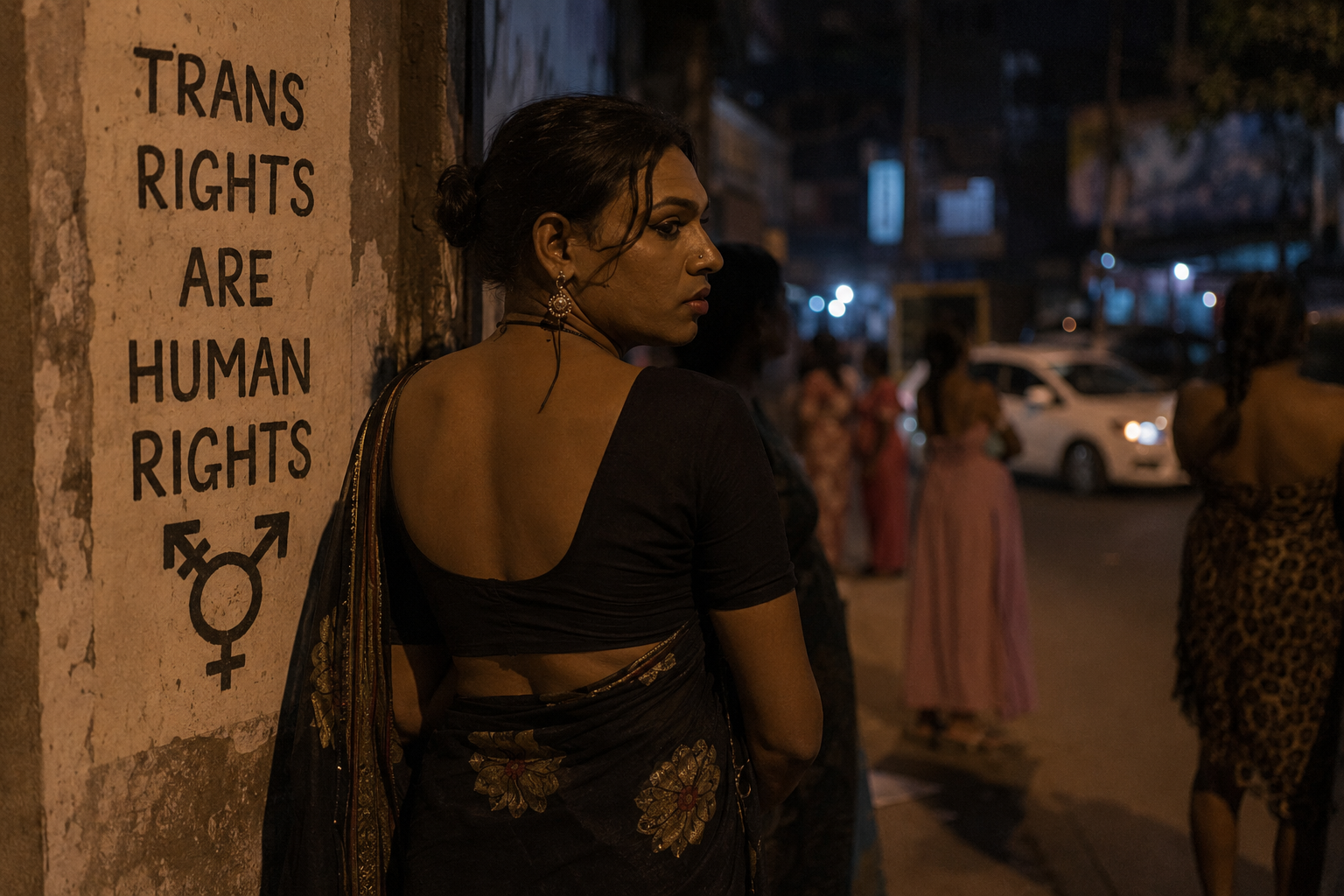
For many transgender persons in India, sex work is not a profession entered by choice as much as one shaped by exclusion.
Long before they encounter the stigma associated with sex work, many transgender individuals have already faced rejection at home, bullying in schools, discrimination in workplaces, denial of housing and barriers to healthcare. By the time they enter adulthood, survival often becomes a more immediate concern than career aspirations.
While conversations around sex workers’ rights in India have gained some visibility in recent years, transgender sex workers continue to remain at the margins; even within advocacy spaces. Their lives are shaped by a unique intersection of transphobia, economic exclusion and occupational stigma, creating vulnerabilities that differ significantly from those faced by cisgender sex workers.
A Community pushed to the margins
Research consistently shows that transgender persons face severe barriers to employment and education.
A National Human Rights Commission (NHRC) study in 2017 found that nearly 96 per cent of transgender persons reported being denied jobs and pushed towards low-paying or informal work such as begging, ceremonial performances and sex work.
The same study found that social rejection was nearly universal, often beginning within families themselves. It further added that only around 6 per cent of transgender people in India were formally employed in the private or NGO sector, highlighting the extent of economic exclusion faced by the community.
“Transgender sex workers face a unique combination of social, economic and legal challenges,” says Shreya Sharma, Founder and CEO of Rest The Case, a platform for legal support.

“Many enter sex work after facing discrimination in education, employment, housing and healthcare. Unlike most citizens, they often experience stigma not only because of their profession but also because of their gender identity.”
Bhawani G. Mann, Founding Partner at Mann & Singh Law Firm, describes this as “multiple layers of marginalisation” stemming from gender identity, occupation and socio-economic status.
“Many experience family rejection, lack of access to education and formal employment, forcing them into informal livelihoods. They frequently encounter police harassment, violence from clients and the public, housing discrimination, barriers to healthcare and difficulties in obtaining identity documents.”
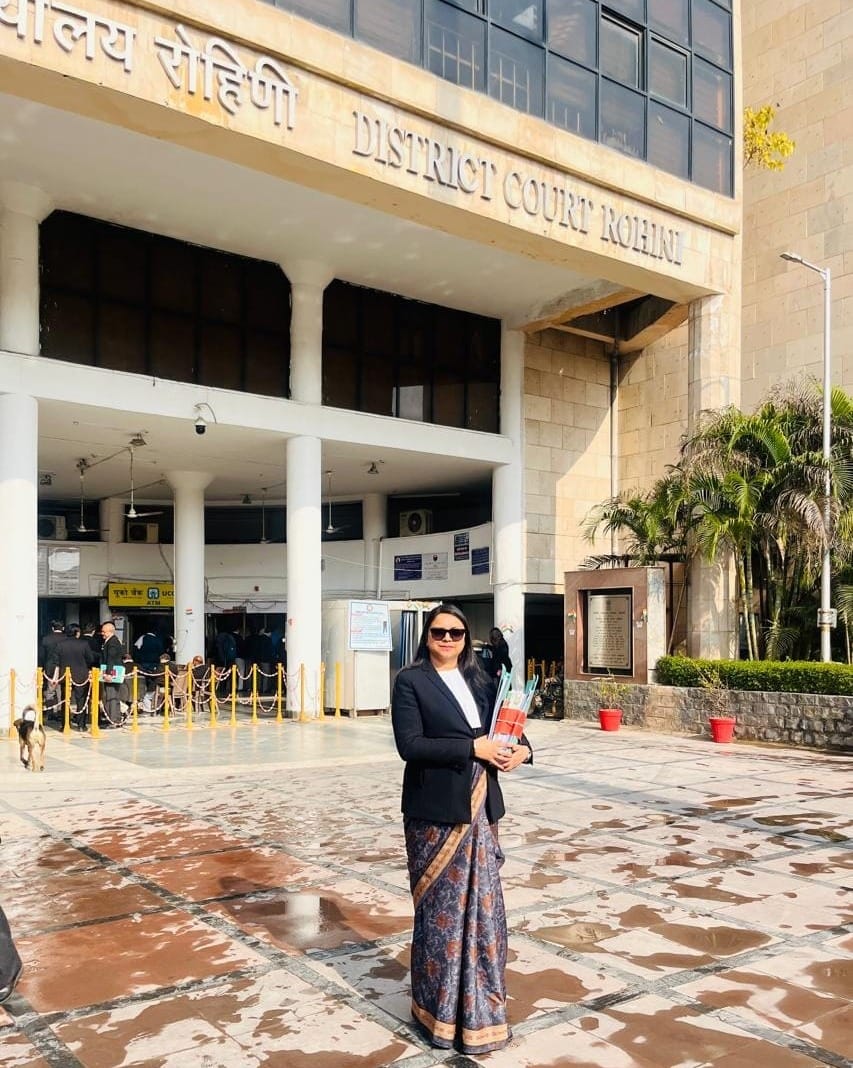
The Law Promises Dignity. Reality Often Doesn’t.
Legally, transgender sex workers are not without protection.
The Supreme Court’s landmark judgment in National Legal Services Authority (NALSA) v. Union of India(2014) recognised transgender persons as a ‘third gender’ and affirmed their right to self-identify. The judgment extended constitutional protections under Articles 14, 15, 19 and 21, guaranteeing equality, non-discrimination, freedom and dignity.
The legal framework was further strengthened through the Transgender Persons (Protection of Rights) Act, 2019, which prohibits discrimination in education, employment, healthcare, housing and access to public services.
Importantly, the Supreme Court’s observations in the Budhadev Karmaskar case reaffirmed that sex workers are entitled to dignity and equal protection under the law.
A New Amendment, Fresh Concerns
While the 2019 Transgender Persons (Protection of Rights) Act was itself criticised by activists for bureaucratic hurdles around identity recognition, the recently enacted Transgender Persons (Protection of Rights) Amendment Act, 2026 has sparked even greater concern within the transgender community. Critics argue that the amendment represents a significant departure from the self-identification principle established by the Supreme Court in the NALSA judgment.
Under the amendment, transgender persons seeking legal recognition must obtain certification through a medical board before receiving an identity certificate from a District Magistrate. The law also narrows the definition of who qualifies as transgender, removing explicit recognition of trans men, trans women and genderqueer persons that existed under the 2019 legislation. Instead, it places greater emphasis on certain socio-cultural and intersex categories.
For transgender sex workers, these changes could have far-reaching consequences.
Identity documents are often the gateway to welfare schemes, healthcare access, housing, banking services and legal protection. Requiring medical certification creates an additional institutional hurdle for a community that already struggles to access healthcare and government services. For transgender sex workers, many of whom live precariously and lack stable housing or documentation, navigating medical boards and bureaucratic procedures may become yet another barrier to securing their rights.
Legal scholars and transgender rights groups have also warned that narrowing the definition of transgender identity could leave some individuals outside the protection of the law altogether. Human rights organisations have argued that the amendment undermines the principle of self-determination by allowing medical authorities to play a gatekeeping role in recognising a person’s gender identity.
The implications are particularly severe for transgender sex workers because legal invisibility often translates into practical vulnerability. Without recognised identity documents, accessing shelters, welfare schemes, healthcare facilities and legal remedies becomes significantly harder. For individuals already facing violence, extortion and discrimination, the inability to prove one’s legal identity can further deepen exclusion.
The amendment has already been challenged before the Supreme Court, with petitioners arguing that the removal of self-perceived gender identity violates constitutional guarantees of dignity, equality and personal autonomy. The Court is currently examining the validity of these provisions.
For transgender sex workers, the debate is not merely about legal definitions. It is about whether the state views gender identity as something individuals know for themselves, or something that must be medically verified before their rights can be recognised. As activists point out, when legal recognition becomes harder to obtain, those already living at the margins are often the first to feel the consequences.
While there are discrepancies in the amended legislation, Sharma says the legal framework is stronger than many assume. “The challenge today is not the absence of legal rights but the implementation of those rights.”
Varun Katiyar, Managing Partner at Consortium Legal, echoes this concern. “There is no legislation specifically safeguarding transgender sex workers. While constitutional protections exist, enforcement often remains inconsistent in practice,” he says.

The ambiguity surrounding sex work itself further complicates matters. While consensual adult sex work is not illegal in India, several activities surrounding it remain criminalised under the Immoral Traffic (Prevention) Act (ITPA), creating opportunities for policing, surveillance and harassment. According to legal experts, transgender sex workers often bear the brunt of these enforcement practices.
How Transgender Sex Workers’ Experiences Differ From Cisgender Sex Workers
All sex workers experience stigma. However, transgender sex workers often face an additional burden rooted in their gender identity.
“While all sex workers face stigma, transgender sex workers often face an additional layer of discrimination linked to their gender identity,” Sharma explains.
The distinction is significant.
Many cisgender sex workers may still have access to family networks, identity documents, healthcare systems or alternative employment pathways. Transgender individuals are frequently excluded from these support structures long before entering sex work.
“Unlike many cisgender sex workers, transgender persons may face exclusion from family support systems, denial of housing, healthcare discrimination and greater barriers to alternative employment opportunities,” says Mann.
Katiyar notes that for many transgender persons, sex work is often linked to survival rather than economic choice.
“They are disproportionately subjected to public harassment, identity-based violence and police profiling,” he says.
Dr Rennie Joyy, Founder of Aalekh Foundation, a not-for-profit organisation working for women and child rights, points to another critical issue: access to welfare and justice.
“They are more likely to be denied alternative livelihood opportunities, face family rejection and homelessness, encounter transphobic violence from clients and authorities and experience difficulties accessing identity documents, welfare schemes and justice mechanisms.”

Violence, Health Risks and Institutional Neglect
One of the most persistent challenges faced by transgender sex workers is healthcare access.
Studies show that transgender communities face significantly higher HIV prevalence rates compared to the general population. UNAIDS estimated HIV prevalence among transgender people in India at around 3.8 per cent in 2021—nearly twenty times the national average.
Other studies have found prevalence rates ranging between 4 and 8 per cent among transgender women, driven by stigma, poverty and barriers to healthcare access.
Yet healthcare discrimination remains widespread.
Transgender persons frequently report being misgendered, denied respectful treatment or unable to access gender-affirming healthcare. Fear of judgment often discourages them from seeking medical assistance altogether.
“Access to healthcare remains severely limited, particularly in relation to HIV prevention and gender-affirming care,” says Katiyar.
This creates a dangerous cycle where health vulnerabilities, economic insecurity and social exclusion reinforce one another.
Rights Without Access
Experts agree that protecting transgender sex workers requires more than legislation.
“Authorities must ensure that existing anti-discrimination laws and constitutional protections are effectively implemented,” says Mann.
This includes: gender-sensitive policing, easier access to identity documents, affordable and non-discriminatory healthcare, legal aid services, housing support, simple access to welfare schemes, and safe reporting mechanisms for violence and abuse.
“Greater sensitisation of police, healthcare providers and public authorities is essential,” Sharma says.
Dr Joyy argues that institutions must move beyond symbolic inclusion.
“Protection requires effective implementation of constitutional guarantees and anti-discrimination laws. Law enforcement and public institutions must be trained to address bias and uphold the rights recognised by courts and legislation.”
Perhaps the most important lesson emerging from conversations with legal experts is that transgender sex workers do not need rescue narratives. They need rights.
For decades, policymaking around transgender communities has often framed them as beneficiaries of welfare rather than equal citizens entitled to constitutional protections.
“Most importantly, institutions must treat transgender individuals as rights-holders rather than beneficiaries of charity,” says Sharma.
Empowerment, experts argue, begins with expanding choices.
That means greater access to education, skill development, entrepreneurship programmes, banking services, housing and healthcare. It means creating pathways into formal employment while ensuring that those who remain in sex work are protected from violence and discrimination.
“Empowerment must focus on long-term structural inclusion rather than temporary welfare measures alone,” Katiyar says.
Dr Joyy adds that empowerment should never come at the cost of autonomy.
“Empowerment requires expanding economic choices rather than imposing them.”
Ultimately, the question is not whether transgender sex workers deserve rights. The Constitution has already answered that.
The question is whether India is willing to ensure that dignity, equality and justice exist beyond courtrooms and legislation and extend into the everyday lives of some of its most marginalised citizens.